Process first. Automation later.
We build the operating system before we automate anything — because automating a broken process only makes the mistakes faster.
Builders of Bharat walks your real workflow, maps how the work actually happens, and builds the discipline — SOPs, rhythms, and clear ownership — that lets your business run the same way every day, with or without you in the room.
You’ve met consultants before.
The presentation was impressive. The PDF was thick. And six months later, nothing on the shop floor had changed. We hold that against our own trade — so we work differently: on the floor, with the people doing the work, building systems practical enough to be followed. If it can’t survive a Monday morning, we don’t ship it.
Four kinds of systems work.
Process mapping & SOPs
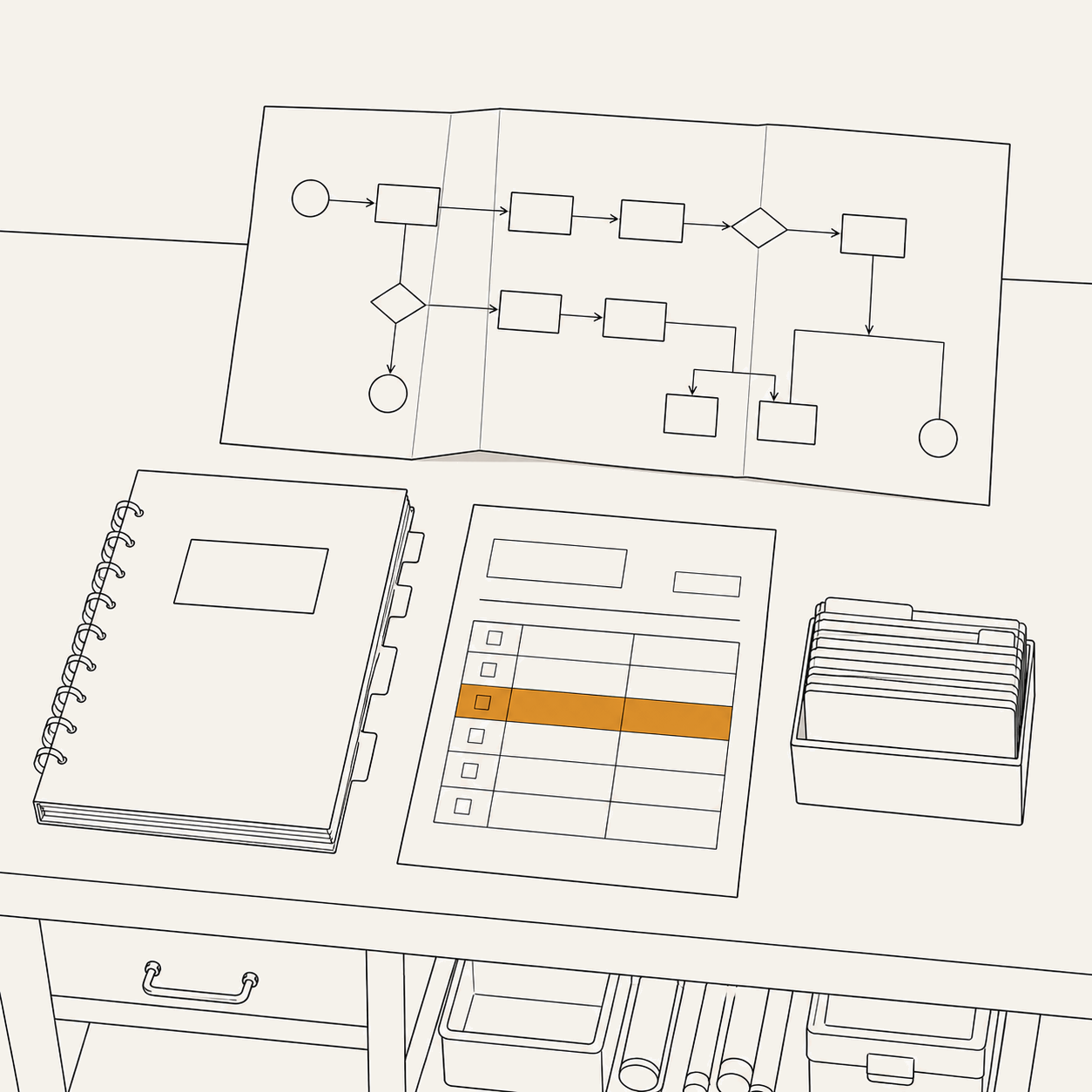
We walk the process, map reality, and write SOPs your team will actually follow — in the language of your floor.
Manufacturing efficiency
Bottlenecks found, layouts questioned, waste named — the discipline of getting more from what you already have.
Marketing & technology advisory
Practical counsel on how you sell and what you run — grounded in what a business your size actually needs.
Technology fitment
The right tools chosen for your process — never the process bent to fit a tool.
It begins with a walk, not a workshop.
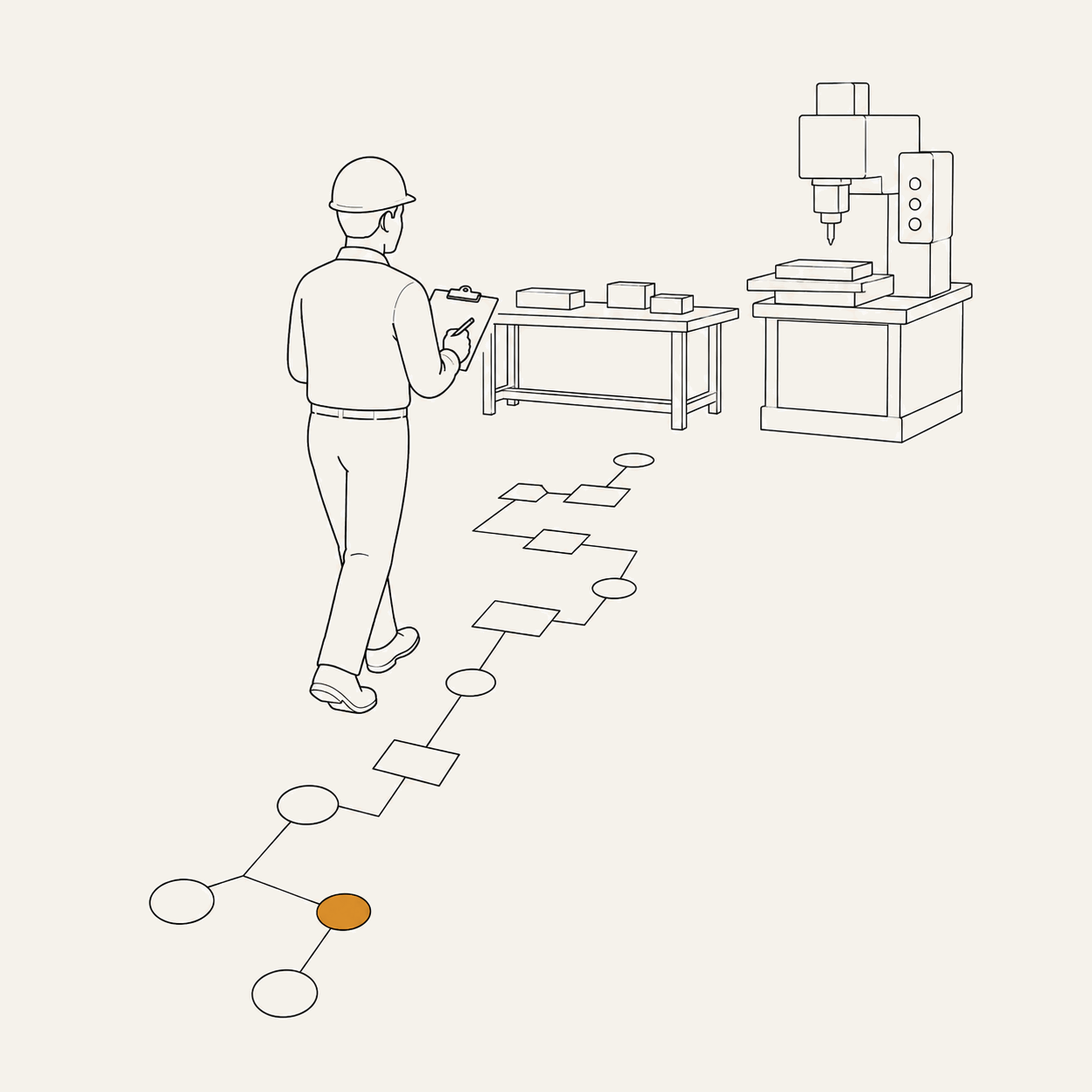
Every engagement starts with a process audit: we walk your floor, sit with the people doing the work, and map how things actually run — not how the org chart says they run.
The audit finds the work.
A karigar takes it.
The automation opportunity map from your audit is where every karigar begins — the repetitive, rule-bound jobs that eat your people’s time, identified on your own floor. That is how Munshi was born, and how the next one will be. First the system. Then the worker fitted into it.
See the digital karigars →
Ready to see how your business actually runs?
Start with a conversation. If there’s fit, the audit comes next — and everything we find belongs to you.
Start a founder conversation